

In recent years, customized towels have become increasingly popular with consumers in the creative market. This trend is not only due to increased consumer demand for personalized products. But also because of the many advantages that direct-to-fabric printer technology has demonstrated in producing bespoke towels.
The following section explores in more detail why direct-to-fabric printers are so popular in the custom towel market. And analyzes their unique benefits in the literacy sector.
1. High degree of personalization and design freedom
Direct-to-fabric printers allow designers and customers to achieve highly personalized designs on towels. In contrast to traditional printing methods. Direct-to-fabric printers are not limited by colors and patterns and can print delicate and intricate patterns and gradients. This is particularly important for creative products, which often need to highlight uniqueness and artistry.
For example, a creative company can design unique towels for different festivals, anniversaries, or specific events to meet the personalized needs of consumers. Whether it’s an intricate pattern or personalized text, direct-to-fabric printers make it easy.
2. High quality and durability
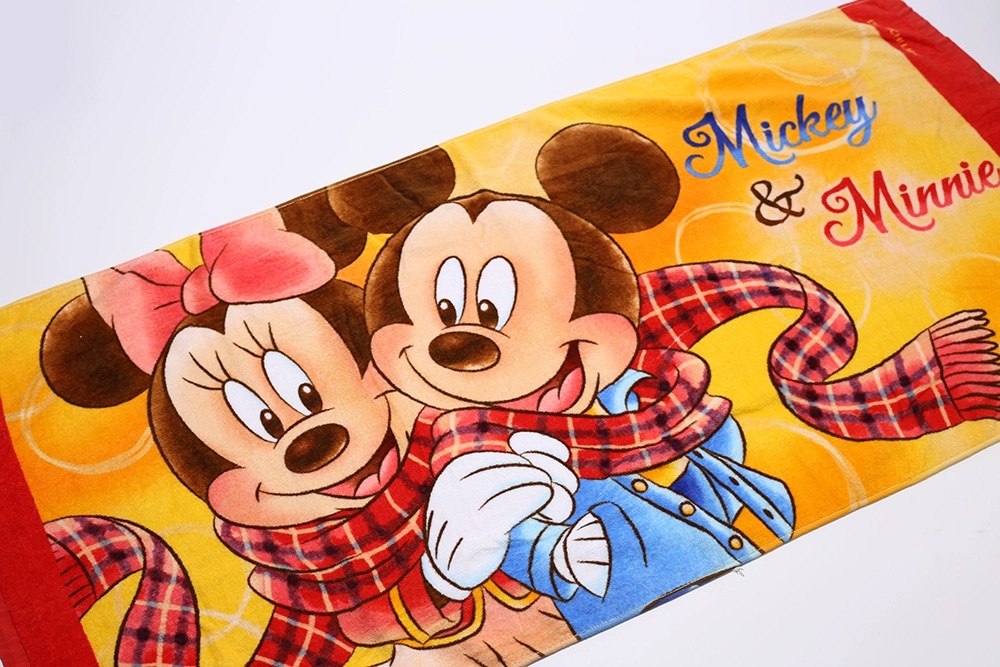
The direct-to-fabric printers use special textile inks to ensure that the patterns printed on the towels have vibrant colors and a fine texture. After many washes, these patterns retain their original color and clarity without fading or blurring. For consumers, high quality and durability are better suited to their needs and offer better value for money.
This high-quality output not only enhances the lifespan of the towel but also increases its artistic and collectible value. Especially in the cultural and creative market, where consumers are willing to pay a higher price for high-quality customized products.
3. Productivity and Flexibility
A significant advantage of Direct to fabric printers is their productivity and flexibility. Compared to traditional printing methods. Direct-to-fabric printers can quickly convert designs without the need for complex plate-making processes, which greatly reduces the production cycle.
For cultural and creative companies, this means they can respond faster to market demands and launch new designs and products.
In addition, direct-to-fabric printers are suitable for small-batch customized production. Which is particularly important for testing market response and personalized orders.
Cultural and creative products usually have unique market positioning and target groups. And small-batch production can effectively reduce inventory risk and improve market adaptability.

4. Environmental protection and sustainability
As consumers become more environmentally conscious. The eco-friendliness of direct-to-fabric printers in the production process has become an important reason for their popularity. Direct-to-fabric printers use mostly water-based ink, which reduces pollution to the environment.
At the same time, the direct-to-fabric printer printing process does not require a lot of water and chemicals. Compared with the traditional printing and dyeing process is more environmentally friendly.
This eco-friendliness is not only in line with the concept of sustainable development in today’s society. But also enhances the image and value of the brand in the minds of consumers. Especially in the cultural and creative field, environmentally friendly and sustainable products are more likely to be recognized and supported by consumers.
Conclusion
In summary, the popularity of direct-to-fabric printers in the customized towel market is mainly due to their significant advantages in terms of design freedom, high quality and durability, productivity and flexibility, and environmental friendliness.
As technology continues to advance and market demand increases, direct-to-fabric printers will play an increasingly important role in the customized towel market for literature and creativity, bringing more high-quality personalized products to consumers.


