
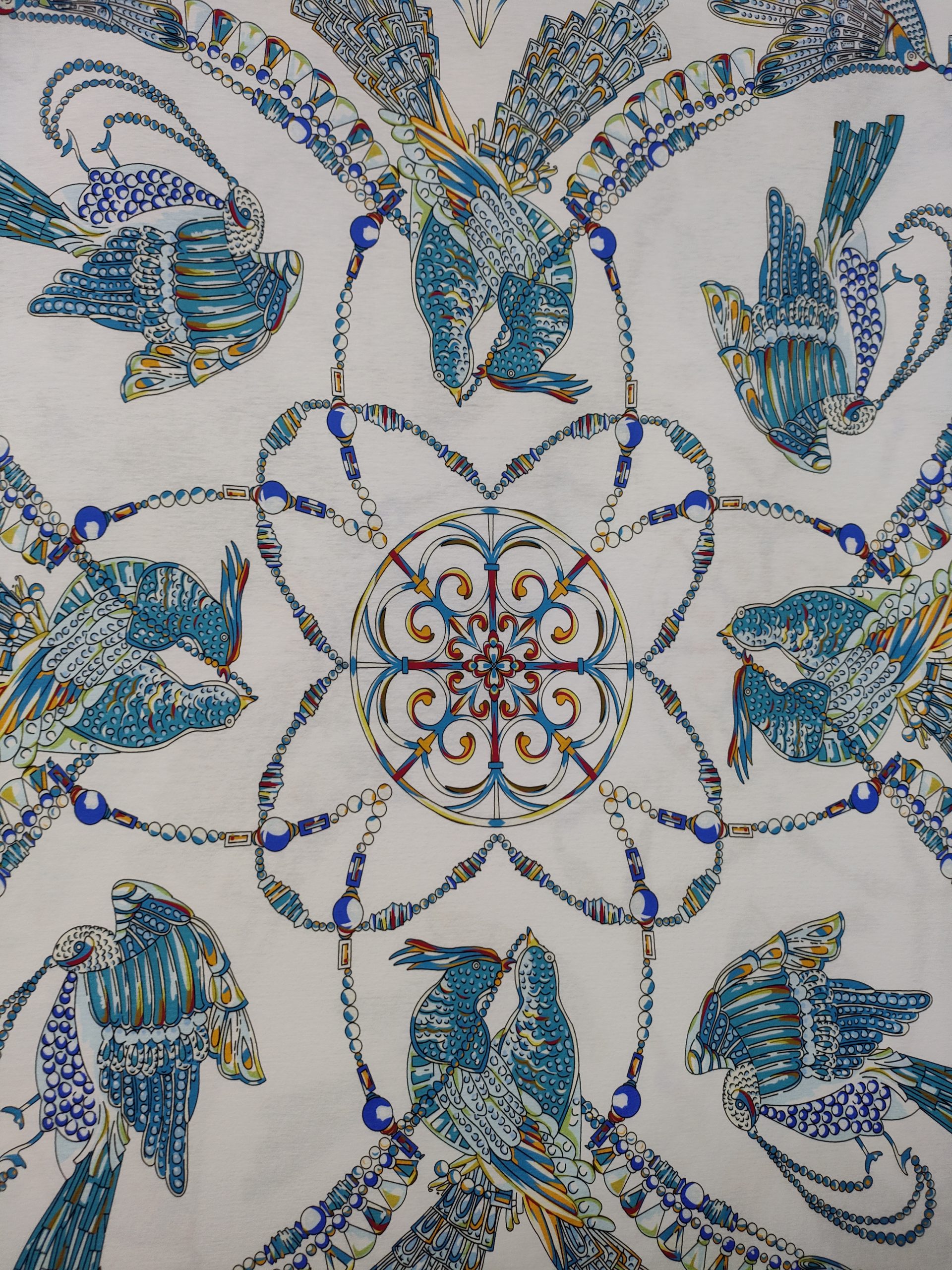
As the textile industry continues to evolve, digital printing technology has become a mainstream production method due to its efficiency, environmental friendliness, and customization capabilities.
In the digital textile printing process, the edge sharpness of printed patterns plays a critical role in determining product quality.
Edge sharpness affects the visual appeal of the final product and the precision and overall aesthetics of the printed design.
Therefore, understanding and controlling the factors that influence edge sharpness is crucial for enhancing the overall quality of digital textile printing.
Factors Related to the Digital Textile Printer Itself
1. Print Head Precision and Inkjet Technology
The print head is the core component of a digital textile printer, and its precision directly affects inkjet accuracy. The print head’s dot matrix precision and nozzle size determine the ink droplets’ fineness. If the nozzle diameter is too large, the ink droplets become larger, leading to diffusion on the fabric and causing blurry edges. Therefore, selecting a high-precision print head can significantly improve edge sharpness.
2. Mechanical Precision of the Printer
In addition to the print head’s precision, the printer’s overall mechanical structure also affects the printing quality. If the paper feed system, guide rail, and motors lack precision, fabric movement may cause misalignment during printing, affecting edge sharpness. Therefore, choosing a printer with high mechanical precision. Such as one with an automatic alignment and stabilization control system, can effectively reduce blurriness caused by mechanical issues.
3. Adjustment of Printing Speed
Printing speed directly influences inkjet results and ink penetration. While faster printing speeds can increase production efficiency, they may cause the ink to spread before fully drying, resulting in blurred edges. Thus, printing speed should be adjusted according to the fabric properties, design complexity, and expected quality to ensure optimal results.

Fabric-Related Factors
1. Fabric Ink Absorption
Fabric ink absorption has a critical impact on edge sharpness. Different types of fabric have varying ink absorption levels.
For example, natural fibers like cotton and linen absorb more ink, which can cause diffusion and blurry edges, while synthetic fabrics tend to absorb less ink, resulting in sharper edges.
Therefore, choosing appropriate inks and printing parameters based on the fabric’s ink absorption is essential to enhance edge clarity.
2. Fabric Surface Smoothness
The texture of the fabric surface also significantly affects the appearance of printed designs. If the fabric surface has unevenness such as fuzz or wrinkles, ink may diffuse or become blocked during printing, resulting in blurred edges. Pre-treating the fabric by flattening or shaping it ensures a smooth surface and improves edge sharpness.
Factors Related to Ink
1. Ink Viscosity
Ink viscosity is one of the critical factors affecting edge sharpness. Low-viscosity inks tend to diffuse more on the fabric surface, leading to blurry edges, while high-viscosity inks maintain the shape of the design edges better. Thus, selecting inks with appropriate viscosity for the fabric is essential for improving edge sharpness.
2. Ink Drying Speed
Ink drying speed also plays a key role in edge sharpness. If the ink dries too slowly, it may spread on the fabric surface, while excessively fast drying may result in incomplete pattern rendering.
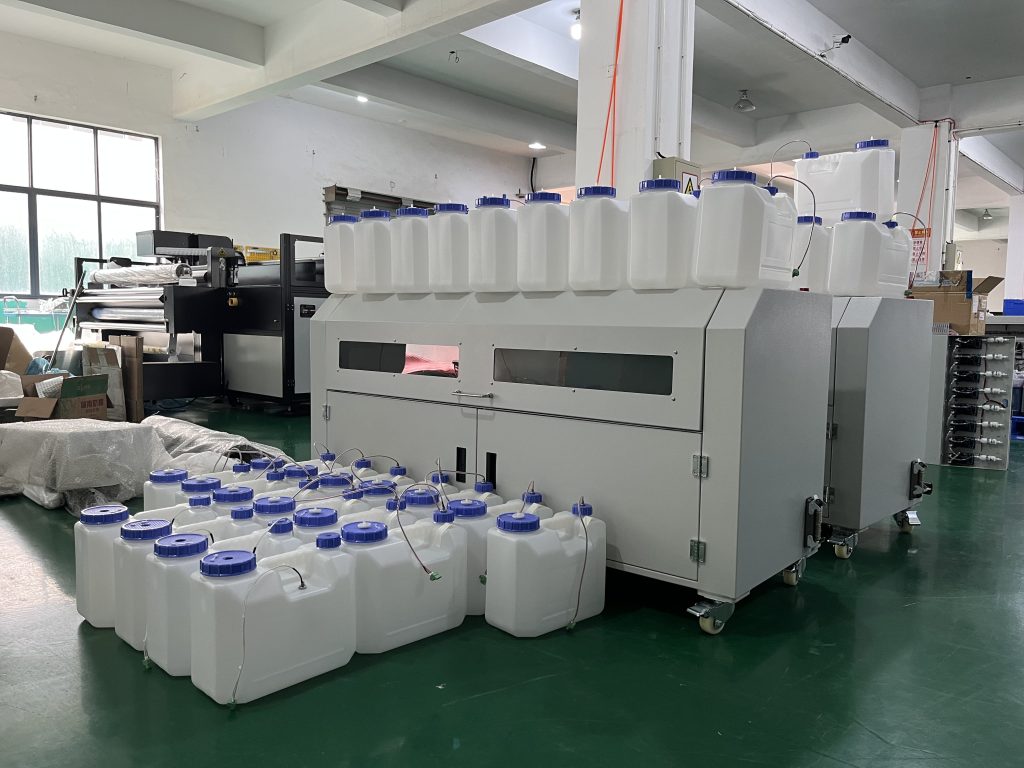
Therefore, the drying speed of the ink should match the fabric’s absorption characteristics, and appropriate equipment settings (e.g., heating or drying systems) should be employed to ensure even and rapid drying, maintaining edge clarity.
Environmental Factors
1. Impact of Temperature and Humidity
Environmental temperature and humidity significantly affect edge sharpness during digital textile printing. In high-humidity environments, fabrics tend to absorb moisture from the air, causing ink to diffuse more quickly, which leads to blurry edges.
Conversely, in low-humidity or high-temperature environments, ink may evaporate too quickly, potentially clogging the print head or deforming the droplets, thus affecting edge sharpness. Therefore, maintaining optimal temperature and humidity levels is crucial for minimizing environmental impact on print quality.
2. Static Electricity
Static electricity is another factor that can influence the printing process. When fabrics generate static electricity, the ink droplets may be disrupted during printing, leading to premature diffusion before reaching the intended position, thus affecting edge sharpness. Eliminating static or using anti-static equipment can reduce this issue and improve printing quality.
Digital Textile Printer Process-Related Factors
1. Pre-treatment Process
Fabrics typically undergo pre-treatment processes such as coating or sizing before digital printing. The quality and effectiveness of these pre-treatment steps directly impact ink adhesion and edge sharpness. For instance, uneven coating or excessive application can cause ink to be overly absorbed in certain areas, leading to diffusion at the edges. Therefore, precise control over pre-treatment parameters and quality is essential for ensuring sharp edges.
2. Post-treatment Process
Post-printing processes such as steaming or fixation also influence edge sharpness. Inconsistent or excessive fixation can cause ink to spread, blurring the edges. Hence, setting appropriate post-treatment parameters to preserve the integrity and clarity of the printed pattern is vital.
Digital Textile Printer Operator Skill Level
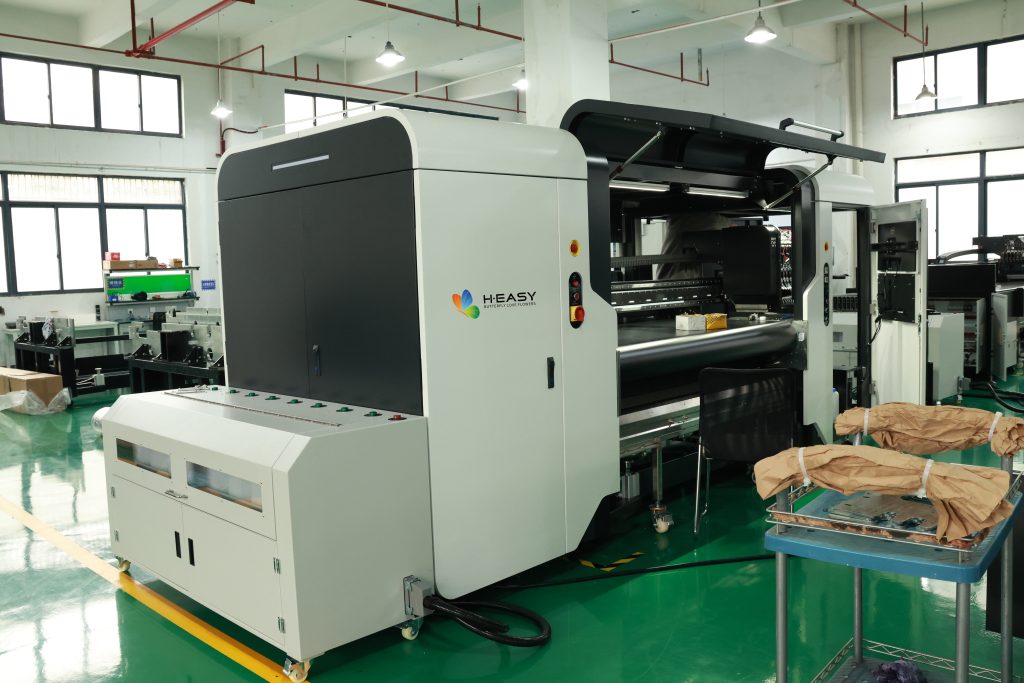
Operating a digital textile printer requires a high level of skill, and the operator’s experience directly affects edge sharpness.
Skilled operators can adjust printing parameters and processes flexibly based on fabric properties, equipment status, and environmental conditions to achieve the best printing results. Therefore, enhancing operator training and improving their proficiency is crucial for maintaining sharp edges in digital textile printing.
Conclusion
The factors affecting the edge sharpness of printed patterns are multifaceted, encompassing both hardware factors like equipment precision, fabric absorption, and surface texture, as well as soft factors like ink viscosity, environmental conditions, and operator expertise.
In practical production, careful consideration and fine-tuned control of these factors are necessary to ensure that the edge sharpness of digital textile prints meets desired standards, ultimately improving product quality and market competitiveness.


