
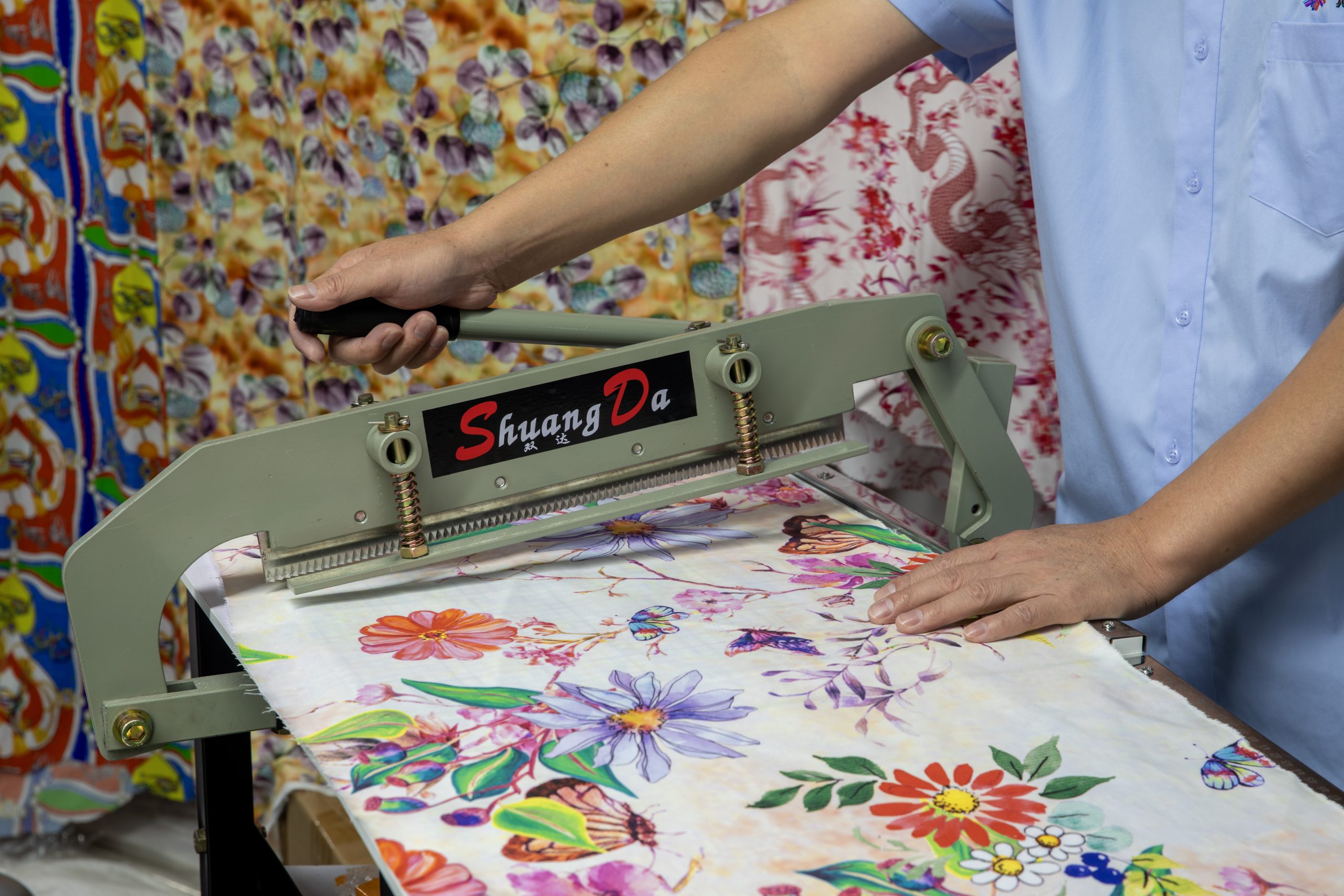
In the field of textile printing, digital direct printing and transfer printing have different application scenarios and technical advantages. They widely use them in clothing, home textiles, industrial fabrics, and other fields.
This paper will analyze these two printing methods in detail. Including the technical principle, process characteristics, and application scenarios. Their advantages and disadvantages, and explore their potential and trends in future development.
Technical Principle and Process Characteristics
1. Digital Direct Printing
Digital direct printing is a kind of textile ink directly sprayed on the fabric surface of the printing method. It usually uses industrial printheads for digital printing, and in the printing process by precisely controlling the amount and location of the inkjet, to achieve high-resolution pattern effects. The basic steps of the direct printing process include fabric pretreatment, digital printing, heat-setting color or steam washing, and finishing treatment.
2. Transfer printing
Transfer printing is a process in which the pattern is pre-printed on the transfer paper. Then the ink is transferred to the fabric surface by heating and pressurization. According to the different materials used, there are two types of transfer printing—heat transfer printing and sublimation transfer printing. Heat transfer printing applies to a wide range of fabrics. Such as cotton, blends, polyester, etc., while sublimation transfer printing is mainly used for chemical fiber fabrics (e.g. polyester) and some hard materials.

Advantages and Disadvantages
1. Digital Direct Printing
Advantages:
Strong process flexibility: Digital direct printing is not subject to the limitations of pattern and color. It can easily achieve multi-color, gradient color, and high-precision pattern presentation, suitable for complex design printing.
Good environmental protection: Digital direct printing adopts water-based environmental protection ink. Compared with the traditional printing process, less waste water and exhaust emissions, are more in line with the current trend of green environmental protection.
Wide adaptability: Applied to a variety of natural and synthetic fiber fabrics. Fabrics do not need coating treatment and can maintain the original feel and softness.
Suitable for personalization, and small batch production: Digital direct printing does not need to make printing plates, reducing the preparation time. So it has obvious time and cost advantages in customization and small batch production.
Disadvantages:
Slower: Digital direct printing production speed is relatively low. Especially in mass production, the efficiency is inferior to the traditional printing method and part of the transfer printing process.
High requirements on fabric quality: Digital direct printing has high requirements on fabric surface flatness and water absorption. And the treatment process, some poor quality or untreated fabrics may affect the final printing effect.
Slightly inferior color fastness: As the ink is directly sprayed on the textile surface, digital direct printing lacks washing fastness and friction fastness compared with transfer printing. Especially on dark-colored fabrics, which are prone to fading or color bleeding.
High cost of equipment and technology: Digital direct printing equipment price is high. Complex technical maintenance, nozzle clogging, and other issues will lead to higher maintenance costs.

2. Transfer Printing
Advantages:
Fast production speed: Transfer printing, especially sublimation transfer printing, has high production efficiency and is suitable for mass production. Continuous production can be realized in the printing process, saving time and labor costs.
High pattern precision: Transfer printing can present meticulous pattern details, including gradient color and rich color layers. The printing effect is not affected by the type and thickness of the fabric.
Excellent color fastness: The dye molecules in sublimation transfer printing directly penetrate the fiber at high temperatures. Forming a stable molecular structure, which gives it excellent color fastness and resistance to washing and rubbing.
Wide range of applications: Transfer printing can be applied to clothing, shoes and hats, home textiles. And hard materials (such as ceramics, and metal) pattern printing. Especially sublimation transfer in polyester chemical fiber fabrics has irreplaceable advantages.
Disadvantages:
Material limitation: Heat transfer printing has high material requirements. Suitable for chemical fiber fabrics such as polyester and nylon, while for natural fibers (e.g. cotton, linen, silk, etc.). It needs to be coated with special treatment or coating, which affects its softness and comfort.
Poor pattern breathability: Transfer printing is attached to the pattern on the surface of the fabric. The breathability and feel of the printed part will be reduced, affecting the comfort of wearing.
High investment in the early stage of the process: Transfer printing needs to make transfer paper (or film), and more printing processes. Pre-panel and material preparation costs are high, and not suitable for small-batch, personalized production.
Relatively weak environmental protection: Especially in the process of heat transfer printing, the transfer film or glue will produce a certain amount of harmful substances. In the sublimation transfer, the use of heat sublimation dyes and post-processing will also have an impact on the environment.

Application Scenarios and Market Analysis
1. Application Scenarios of Digital Direct Printing
Due to its high flexibility and fine pattern effect, digital direct printing has been widely used in the fields of personalized clothing, customized home textiles, and art derivatives. Typical application scenarios include:
Clothing customization: Small-lot, multi-style clothing customization, such as T-shirts, dresses, jeans, and so on. Especially in the field of personalized T-shirts, couples’ clothing, parent-child clothing, etc., direct printing can quickly respond to market demand.
Home textile printing: High-end bedding, curtains, tablecloths, and other home textile products. Digital direct printing can realize high-definition pattern presentation and can maintain a high economy in small batch production.
For fashion accessories: Such as silk scarves, scarves, handkerchiefs, and other products printed. Digital direct printing can retain the original softness of the fiber is skin-friendly, and is suitable for complex pattern printing.
2. Transfer printing application scene
Manufacturers mainly use transfer printing in the mass production of chemical fiber clothing., home textiles, and part of the hard material printing, suitable for scenes including:
Sportswear: Sublimation transfer printing is widely used in sportswear, such as jerseys and yoga clothes, which can provide excellent color fastness and breathability.
Advertising display: All kinds of advertising cloth, banners flags, and other display materials production. Sublimation transfer printing color performance and weather resistance can well meet the needs of outdoor displays.
For personalized gifts: Such as coasters, cell phone cases, mouse pads, etc., heat transfer printing can realize the printing of complex patterns on hard materials, which is one of the important processes in the personalized gift market.

The Future Development Trend
With the textile industry digitalization, the continuous advancement of the intelligent process, digital direct printing, and transfer printing in the future will play their respective technical advantages, in the following aspects of breakthroughs and development:
1. The development trend of direct injection printing
Enhance production speed and efficiency: As industrial printhead technology advances, digital direct printing speeds to increase significantly in the future, thereby further expanding its application in mass production.
New ink and environmental protection technology: High-performance, low-energy environmentally friendly ink will become an important direction in the development of direct printing, which can enhance color fastness and printing quality, and further reduce the environmental impact of the production process.
2. The development trend of transfer printing
Broaden the application materials: The research and development of new coating technology and transfer materials will help transfer printing break through the traditional material limitations to achieve more natural fibers and new synthetic materials for printing applications.
Green process innovation: With the increasingly strict environmental regulations, the control of harmful substances in the transfer printing process and the application of non-polluting materials will become an important direction for future research.


