

The garment printing process refers to the processing of forming decorative or functional patterns on the surface of fabrics through various techniques and means.
With the development of the textile industry, the garment printing process from traditional hand printing gradually developed to modern digital printing technology. Showing the characteristics of diversification and refinement.
This paper will be from the traditional printing process and modern printing process. Its application areas of three aspects. As well as a comprehensive introduction to the types and characteristics of the garment printing process.
Traditional Printing Process
The traditional printing process is the origin of garment printing technology. Relying on physical contact and moulds to achieve pattern transfer. Mainly including the following types:
1. Handmade printing
Handmade printing is the oldest printing method, including batik, tie-dye and hand-painted techniques. Its main feature is to give the fabric a unique artistic sense and irregular natural texture through manual operation.
Batik: Wax sealing blocks the penetration of dyes to form patterns. People mostly use batik for ethnic clothing, creating patterns with strong cultural characteristics.
Tie-dye: By binding the fabric and partially dyeing it, a unique gradient effect is formed. Tie-dye is commonly used in the special designs of fashion brands.
Hand-painted printing: draw patterns directly on the fabric surface, suitable for making personalised and customised products.
2. Screen Printing
Screen printing uses a screen as a template, and the dye is transferred to the fabric by scraping the dye through the holes of the screen with a squeegee. Its advantages are bright colours and good durability, and it is widely used in the printing of T-shirts, sportswear and other products.
3. Transfer printing
Transfer printing is to print the pattern on the paper first, and then transfer to the fabric surface by heating and pressure. Common transfer printing processes include heat transfer and cold transfer, which are characterised by high pattern accuracy and suitable for complex multi-colour patterns.

Modern Printing Process
With the development of technology, modern printing processes have achieved significant improvements in efficiency, environmental friendliness and design flexibility. Among them, the application of digital and intelligent technology has driven the change in the garment printing industry.
1. Digital Printing
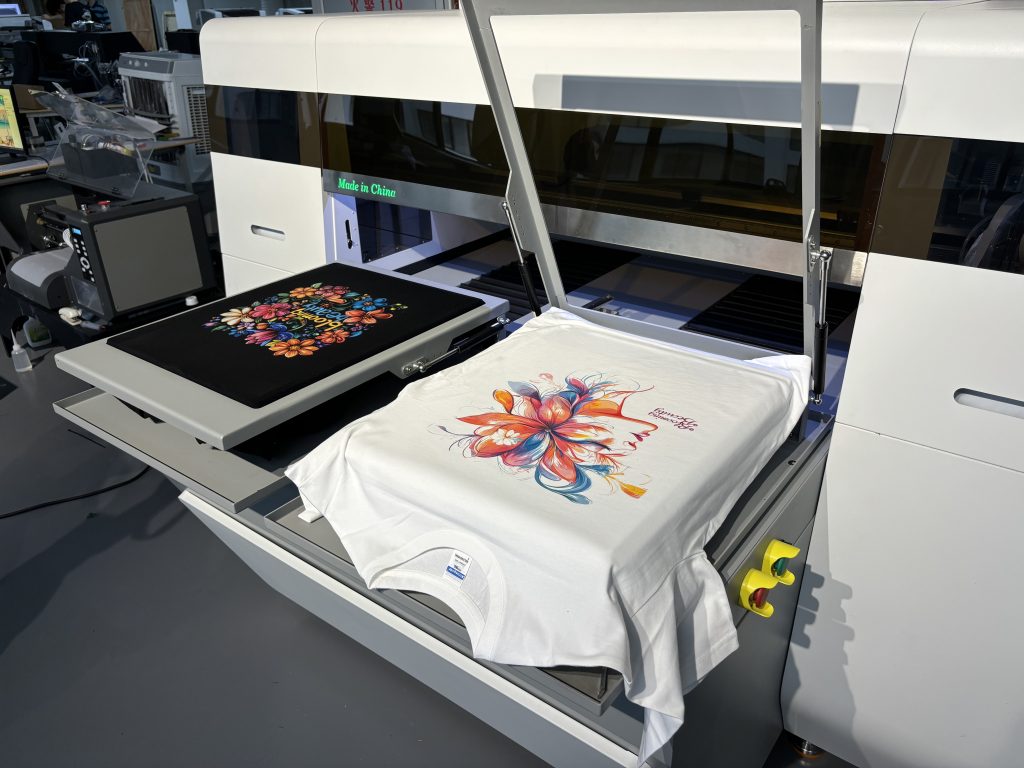
Digital printing is one of the fastest-growing printing technologies in recent years, which realises high-precision pattern printing by spraying dyes directly onto the fabric surface through digital printheads.
Advantages:
High flexibility: support for small batches, diversified production, no plate making, shorten the production cycle.
Fine pattern: High-resolution printing with high colour reproduction is possible.
Good environmental protection: reduces waste water and chemical emissions in traditional printing.
Application: Widely used in customised clothing, home textile products and fast fashion brands that respond to the market quickly.
2. Heat Sublimation Printing
Heat sublimation printing uses heat sublimation ink to vaporise at high temperatures and penetrate directly into the polyester fibre. Its high washability and full color make it suitable for sportswear, swimwear, and decorative fabrics.
3. UV printing
UV printing cures the pattern directly onto the fabric surface through ultraviolet curing ink, featuring instant drying and bright colours. The process is suitable for high-end customised garments, shoes and hats, as well as the pattern production of leather products.
4. Gravure printing
Gravure printing is an industrialised high-volume printing technique, which transfers dyes to fabrics by engraving intaglio plates, which is highly efficient and suitable for producing long rolls of fabrics.
Application Areas of the Garment Printing Process
The application of different printing processes in garment production varies according to their characteristics. The following are a few typical areas of application:
1. Fashion Apparel
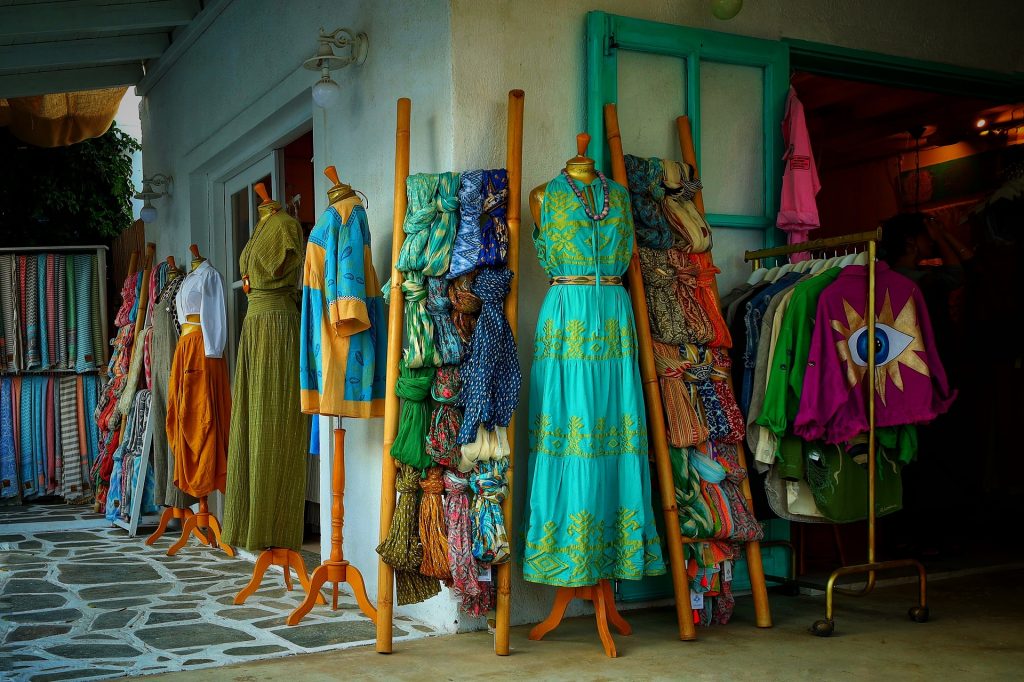
In the field of fashion, designers often use a variety of printing processes to create unique styles. For example, designers use digital printing to quickly create complex patterns and hand printing to add an artistic touch to couture clothing.
2. Sportswear
With its excellent durability and colour performance, heat sublimation printing is the process of choice for sportswear, especially for personalised team uniforms and co-branded products.
3. Home Textiles and Decoration
Home textile products such as curtains, bedding, carpets, etc. use a lot of screen printing and digital printing processes to meet consumer demand for aesthetics and environmental protection.
4. Fast Fashion Brands
Fast fashion brands need to respond quickly to market demand, digital printing of the rapid production of no version of the characteristics can be very good to meet this demand, from design to production cycle is greatly reduced.
Development Trend of the Garment Printing Process
The garment printing process is developing in the direction of being more efficient, more environmentally friendly and more intelligent:
Environmentally friendly: With the promotion of the concept of sustainable development, the use of green materials and water-based dyes in the printing process will further increase.
Intelligent: Combined with AI design and intelligent production equipment, the printing process will achieve a higher level of automation in the future.
Personalisation: Consumer demand for personalised products is driving the rise of small-lot customised printing, and digital printing will occupy an important position in this field.
Conclusion
The diversity of apparel printing processes provides designers and brands with unlimited room for creativity.
From traditional handmade techniques to modern digital technology, each process has its own unique charm and applicable scenarios.
With the continuous progress of technology, the garment printing process will find a better balance between the pursuit of artistry and functionality, adding more colour and convenience to people’s lives.


